Ring’s Super Bowl Ad and the Real Story of Surveillance Among Us
Acest articol este disponibil și înromână
• 3 minutes read
Mass surveillance is already the norm and guess what? You're paying for it.
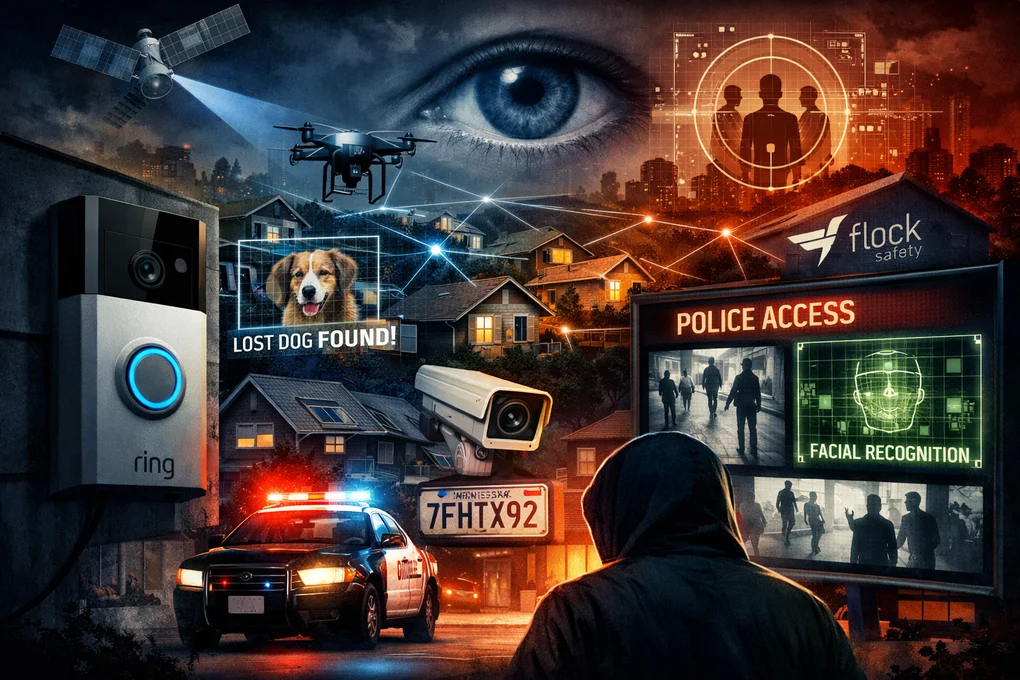
During the last Super Bowl, Amazon’s Ring aired a commercial about its new AI-powered “Search Party” feature for finding lost dogs. The story was straightforward and emotional: a child loses her dog, uploads a photo to the Ring app, neighborhood cameras search for a match, and the dog is found and returned.
On the surface, you’d think this was just another cute tech story to break through the ad clutter. Instead, what millions of viewers saw triggered a wave of backlash and a deeper conversation about what all those cameras around us really mean.
The problem isn’t the dog. It’s the infrastructure that the ad normalizes: millions of little video sensors mounted on porches, feeding video up into cloud services, searchable by AI on demand. The ad depicted search grids and AI detection scanning neighborhoods. For many, that crossed a line from “helpful gadget” to “mass surveillance network.”
Critics didn’t call the ad heartwarming. Instead, they used words like dystopian and creepy. For years, many people hardly noticed how much surveillance was happening around them. Now, the fear felt real—if a system can scan cameras to find a dog, what stops it from being used to find people, especially without their consent?
This issue is not just theoretical. Ring has a history of privacy concerns. The company has allowed law enforcement to access user footage through programs like Community Requests. It was criticized for letting police get footage directly from users instead of requiring warrants. Ring said it stopped this in 2024, but later continued similar practices through partnerships with evidence platforms.
In late 2025, Ring said it planned to partner with a surveillance company called Flock Safety. Flock is a commercial surveillance tech firm, not a neighborhood watch group. It makes automated license plate readers and camera systems used in thousands of U.S. communities. These systems scan vehicles, log details like license plates, timestamps, locations, and visual features, and share the data with police. This creates a searchable database that police can use to track vehicles over time and across locations.
The planned integration would have allowed law enforcement using Flock’s platforms to make direct Community Requests for Ring camera footage from users in certain areas. Ring said that data sharing with Flock never actually happened because the integration was never launched, and no customer videos were exchanged. Still, the fact that the deal was considered raised concerns. Combining private home cameras with an automated license plate reader network set off privacy alarms for both advocates and regular users.
The public responded quickly to the Super Bowl ad. On social media, people linked the idea of “AI scanning hundreds of cameras” to worries about widespread surveillance. Some pointed out that Ring’s opt-in and consent language doesn’t mean much when the default is to turn features on and most users skip the fine print. The Electronic Frontier Foundation and public figures like Senator Edward Markey also criticized the privacy risks, especially since features like facial recognition (“Familiar Faces”) are already included.
After the backlash, Ring and Flock quietly pulled the plug on their planned partnership. Officially, they said the decision was mutual and due to resource and timing issues, not because of the ad, and they repeated that no data was ever shared. Still, the bigger issue remains: customers have paid for and set up a sensor network that could easily become a much larger “public safety machine” with just a few software updates or new agreements.
The main point is this: Ring doesn’t need a hidden backdoor to create a surveillance system. People willingly buy and install the cameras, connect them to company cloud services, and agree to terms that allow footage to be collected, analyzed, and sometimes shared. With AI scanning for patterns, this becomes a searchable network that could easily shift from finding lost pets to invading privacy. Once the data pipeline is in place, adding features like biometrics, license plate tracking, cross-camera searches, and law enforcement access is just a small step away.
If you’re unsure whether this is just paranoia or a real concern, consider how much debate a 30-second ad sparked. Making neighborhood-wide AI scanning seem normal isn’t a small thing. It changes how we view public and private spaces.
The technology itself isn’t bad. Connected devices, community alerts, and AI can be helpful. But when tech bros put dual-use systems in millions of homes without strong legal protections, kill switches, or clear limits on law enforcement, we need to pay attention. The dog-finder ad was just a hint of the surveillance state already taking shape.